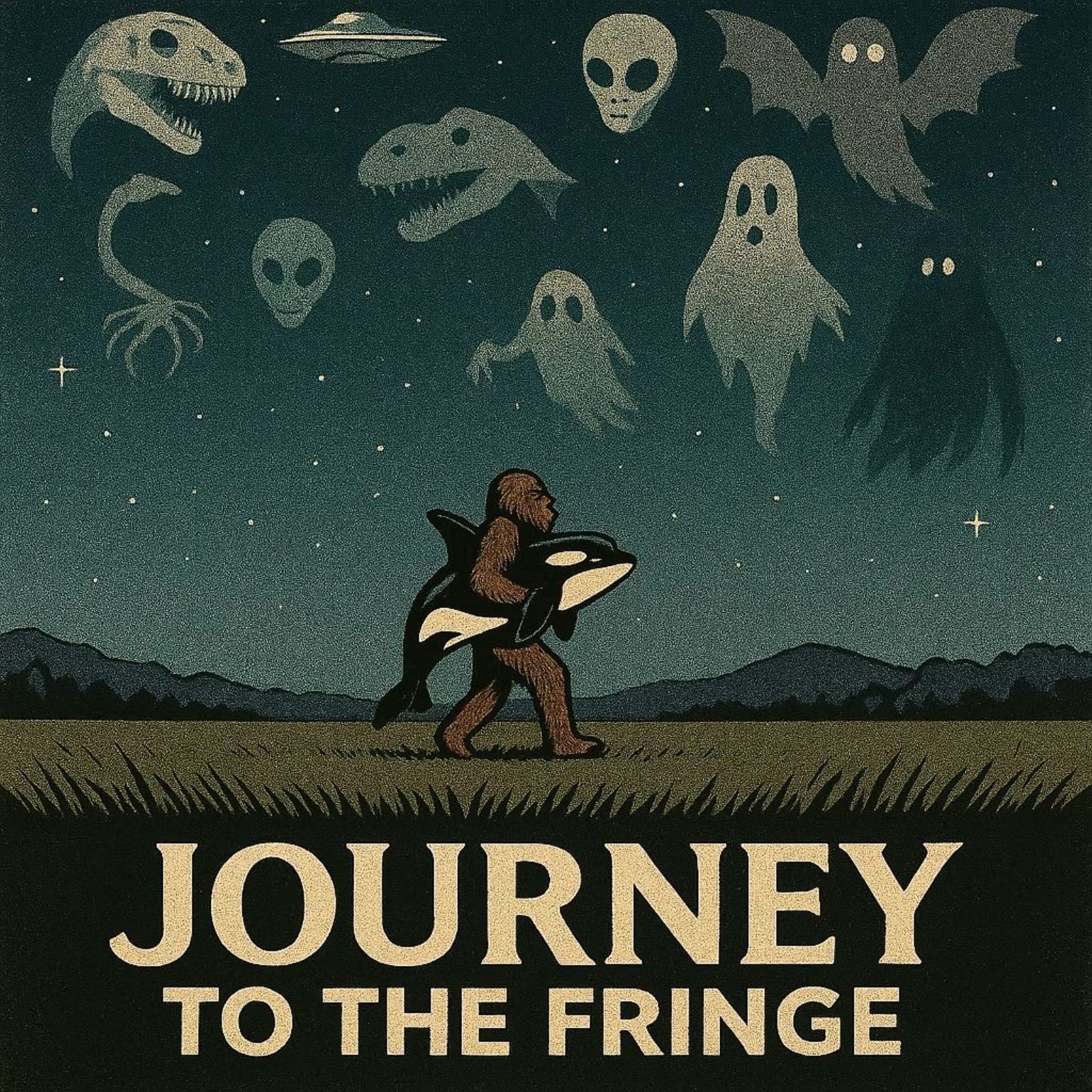
Journey to the Fringe is a paranormal and odd-culture show with one foot in source material and the other in real-time reaction. Taylor and Chelsea give it a brisk, conversational shape. Episodes often begin with a premise that sounds absurd, then stretch into history, news clips, named figures, articles, encounter reports, or institutional detail. The show does not treat weirdness as sacred. It also does not flatten every strange claim into a punchline. That tension is the point. A little-person sighting can lead to talk of lost time, vehicle failures, media silence, and MUFON or Newford references, while still leaving room to question why someone had their arms out like an airplane. The Fringey Mini episodes widen the map. One week might involve a report about old smuggled meat in China. Another might hit dream research, Northwestern University, sleeping volunteers, REM signals, and the immediate question of how any of that worked. UFO stories get similar treatment, especially when an article about erased Black Vault files becomes a complaint about sloppy framing, political distraction, and the moral usefulness of backups. The longer arcs let the show get heavier. The Opus Dei episodes move through banks, celibacy, self-flagellation, gendered labor, and allegations that women inside the organization were treated as unpaid maids. It is blunt material handled with a blunt tone. Uri Gellar’s story shifts from spoon bending into celebrity mythmaking, Salvador Dali, a crystal ball, a Cadillac covered in bent spoons, and the strange persistence of public mystique. Even archaeological news gets pulled into the same rhythm, with a newly found Moai on Rapa Nui treated as both genuine discovery and conversational chaos. Journey to the Fringe is for people who enjoy paranormal lore, but prefer it with side-eye, interruptions, and visible seams in the research process. The show’s charm comes from hearing curiosity and skepticism argue in the same room.