Topics / Military History
Military History Podcasts
286 shows and 38,464 episodes sit under Military History.
Curated guide to military history podcasts in 2026: WWI and WWII deep-dives (Key Battles of American History, WW2 Pod), American Civil War narrative and battlefield
Swipe · Military History only
Swipe through Military History
Save time discovering your next favourite podcast by listening to just the best minute of an episode.
The military history slate · every cover a link
All 286 military history shows →


The beat, written
What is actually on this beat
First decide how close you want to stand to the fighting. Some shows keep the campaign map open, advancing division by division; others work through memoir, archival broadcasts, films, interviews, or arguments about how wars are remembered. The difference is as much about listening style as period. Choose Battles & Campaigns for operational chronology and battlefield decisions. Move into Modern Warfare & Defense for strategy, intelligence, arms control, and the institutions built around conflict; take the World War II route when one war deserves the whole frame.
For political and social history beyond the fighting, go up to History. Move to American History when presidents, institutions, and national life matter more than troop movement. Look in Ancient History for the wider societies behind classical armies. Stay with the military thread when terrain, command, logistics, weapons, and lived experience are what make the past legible.
The map room
Key Battles of American History is a friendly two-voice guide for listeners who want their bearings before the action begins. One voice carries much of the prepared narrative while the other adds context, corrections, film knowledge, and the occasional joke. Its Revolutionary War sequence moves from RW1: The Roots of the Revolutionary War through RW7: The New York and New Jersey Campaign and RW9: The Tide Turns: Saratoga, making it an unusually easy place to settle into a long campaign.
Battles of the First World War Podcast is more deliberate and map-conscious. Solo battlefield narration shares space with extended historical interviews, and specialized language comes with practical explanations rather than a test at the door. Try British Doctrine in the Great War with Phil Watson for the interview side or The French Army in the First World War, a Discussion: 1917, Pt 1 for a tightly bounded entry into a complicated front.
Stories of the Civil War brings more dramatic pressure. Its solo narration is brisk, chronological, and attentive to the point where weather, morale, politics, and command failure collide. Stuck in the Mud: Burnside, the Generals' Revolt, and the Army of the Potomac's Darkest Winter gives the measure of its appetite for crisis, while The Wilderness (Grant's Overland Campaign, Part 1) opens a longer operational story.
Western Civ works at a wider scale, placing battles inside sequences of political breakdown and consequence. The delivery is sober and explanatory, with enough narrative momentum to keep the lecturerly confidence from turning dry. Its First World War run includes Episode 537: Sleepwalkers, Episode 539: The Miracle at the Marne, Episode 540: Tannenberg, and Episode 542: Meat Grinder.
Ancient Warfare Podcast changes the texture completely. A recurring panel reasons aloud, corrects itself, questions tidy turning points, and lets technical discussion become conversational without sanding off the difficulty. The range between Why Did Helmets Have Crests?, Outflanking as a Tactical Innovation, and Roman Military Signalling makes it a strong choice for listeners who enjoy arguments about how warfare worked, not merely what happened next.
Five doors into the Second World War
WW2 Pod: We Have Ways of Making You Talk is the lively, slightly scruffy option: two informed voices moving between campaign scale, human detail, moral reaction, and black humour. Long narrative runs are punctured by quick challenges or incredulous asides. The multipart sequences Operation Barbarossa: Seeds of Calamity (Part 1) and Operation Barbarossa: Barbarossa Unleashed (Part 5) reward sustained listening, while Naval Battle of Narvik: Annihilation (Part 3) offers another theatre.
Beyond Barbarossa: The Eastern Front of World War 2 is better suited to listeners who want one knowledgeable guide controlling a large chronology. It repeatedly pauses to orient the listener among fronts, cities, armies, and political consequences, then narrows the view. Spring Awakening and Upper Silesia: Episode 97 and The Vise Closes: the Eastern Front, episode 91 show that geographic focus plainly.
Pete & Gary's Military History makes room for more conversational mess. Scripted narration and quoted recollection are broken up by questions, corrections, pronunciation tangles, and dry jokes, yet the timeline keeps reasserting itself. Its South Notts Hussars sequence runs through SPECIAL: South Notts Hussars - Conditions at Tobruk, SPECIAL: South Notts Hussars - El Alamein, and SPECIAL: South Notts Hussars - Sicily & Home.
The World War 2 Radio Podcast replaces modern explanation with the rhythms of preserved broadcasting. Drama, narration, comedy, music, speeches, sponsor material, and news-style performance hand the listener from scene to scene. The Air Arm in World War 2, Harry Truman 1946 Army Day Speech, and News of the World 10/5/1945 are useful reminders that hearing the period can feel very different from hearing it reconstructed.
Rosie the Reviewer: a WW2 movies and shows podcast approaches the war through screen stories. Its two-host conversations move from quick reactions into plot recap, production detail, adaptation choices, and historical context, with enough warmth and irreverence to avoid classroom formality. Someone whose first questions concern what a film changed, omitted, or made unexpectedly vivid can start here.
Strategy, scholarship, and memory
New Books in Military History leads with patient scholarly interviews rather than campaign narration. Rotating interviewers give authors room to explain research origins, archives, institutions, and contested interpretations. Recent titles stretch from Kristan Stoddart, "Russia's Hybrid Warfare Offensive Against the West" (de Gruyter, 2025) to Jane Vaynman, "Enemies in Agreement: Political Volatility and the Design of Arms Control" (Cambridge UP, 2026) and Lewis Sage-Passant, "Beyond States and Spies: The Security Intelligence Services of the Private Sector" (Edinburgh UP, 2024). For the Modern Warfare & Defense route, this is the clearest bridge from historical study into contemporary security questions.
World War II Daily Podcast also works through interviews, but with a plainer and more informal rhythm. Short prompts open into long explanations, while clarifications and digressions leave room for artifacts, local memory, terminology, and the practical work of preservation. Episode 23 - Dr. Henning Pieper: Fegelein's Horsemen and Genocidal Warfare: The SS Cavalry Brigade in the Soviet Union signals the seriousness of its guest-led approach.
Where to start
For a welcoming campaign narrative with two voices and a clear map, start with Key Battles of American History. Choose Ancient Warfare Podcast when debate, uncertainty, and technical questions are the pleasure. For an extended Second World War sequence, try WW2 Pod: We Have Ways of Making You Talk; for primary-period atmosphere, go straight to The World War 2 Radio Podcast.
Featured shows below are part of the PlayNext catalog. Updated weekly.
Featured shows
8 shows, described rather than listed
Each has a written blurb stored with the page, with the role its editor gave it on this beat.
Two-voice duo walking WWI and major American conflicts in depth. Pairs operational episodes with film coverage of the same era — *Sergeant York*, *War Horse*, *Wings*. Active GW series through spring 2026.
WWII deep-dive show that zooms between campaign map and individual foxhole. Four-part *Japan's Road To War* (April 2026) and four-part Audie Murphy biography are the recent anchors. The slate's fullest WWII entry.
Scripted historical-narrative solo show. Dense, chronological, dramatic. Covers command failure, individual biography, and overlooked episodes — the Allegheny Arsenal explosion, the Saltville massacres — alongside the major campaigns.
Battlefield-guide format: licensed guides with deep site expertise fielding questions, walking specific terrain. Covers Pickett's Charge, Brandy Station, Civil War railroads, and the 20th Massachusetts alongside cultural memory episodes.
Covers early antiquity through late Rome. Recent episodes on Athenian archers, outflanking as tactical innovation, Roman military signalling, and the Hannibal–Scipio question. Shorter format, question-driven.
Narrative civilizational history that surfaces military turning points as focal episodes. Spring 2026 run covers Bull Run through Gettysburg in sequence, embedding each battle in broader American and European context.
Broader history show with a military-and-political-curiosity thread. Not a military specialist, but regularly surfaces overlooked wartime episodes and morally complicated historical moments.
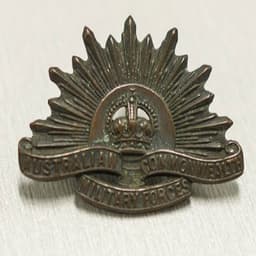
Small but active entry representing the Commonwealth and Pacific dimension of military history — a perspective mostly absent from the rest of the slate.
Where to start
6 routes in, one per reader
*GW11: The Brusilov Offensive* is the entry into the ongoing GW series. Pair with *Beneath Hill 60* and *War Horse* film episodes for cultural context alongside the operational record.
*Japan's Road To War: Empire of the Rising Sun (Part 1)* is the entry for the Pacific theater. For biography-as-military-history, *Audie Murphy: Sicily & Salerno (Part 1)* is the starting point.
*Stuck in the Mud: Burnside, the Generals' Revolt, and the Army of the Potomac's Darkest Winter* is the best single-episode entry into the campaign narrative.
*Ask A Gettysburg Guide #122: Pickett's Charge with Jim Hessler* is the entry for site-specific depth. Pair with *The Gettysburg Address: Then, Now, and For All Time* for the cultural-memory dimension.
*Did Hannibal and Scipio Africanus Really Meet?* and *Outflanking as a Tactical Innovation* are the two best entry episodes — both treat tactical questions with genuine seriousness.
*Episode 524: Bull Run* starts the spring 2026 Civil War run. The sequence through Episode 528 (Gettysburg) situates each battle in the broader sweep of American and European history.
Glossary
Words this beat uses without explaining
The sub-genre focused on the mechanics of campaigns: troop movements, logistics, command decisions, unit-level action. Distinct from political or social military history. *Key Battles of American History* and *WW2 Pod* sit closest to this end of the spectrum.
The formal listing of units, their composition, and their commanders for a specific engagement. Military history podcasts that go deep on operational detail will reference the order of battle to explain why a campaign unfolded as it did.
A multi-episode serialized run covering a single campaign, theater, or war in episodic sequence. *Key Battles of American History*'s GW series (Great War) is the slate's clearest example — fifteen consecutive episodes as of April 2026.
A podcast format where licensed battlefield guides discuss specific terrain, actions, and historical questions grounded in physical site knowledge. *Addressing Gettysburg* is the slate's primary example.
Episodes or series centered on a single military figure rather than a campaign or war. *Stories of the Civil War*'s coverage of Oliver Otis Howard and Patrick Cleburne, and *WW2 Pod*'s four-part Audie Murphy run, are examples on this slate.
The ongoing episodic Great War (WWI) run from *Key Battles of American History*. As of April 2026, episodes GW11 through GW19 have covered the Brusilov Offensive, the Somme, the Air War, the Russian Revolutions, and America's entry into the war.