Topics / Public Health
Public Health Podcasts
95 shows and 11,744 episodes sit under Public Health.
Discover the best public health podcasts covering epidemiology, outbreak surveillance, health equity, NHS systems, and rural community health
Swipe · Public Health only
Swipe through Public Health
Save time discovering your next favourite podcast by listening to just the best minute of an episode.
The public health slate · every cover a link
All 95 public health shows →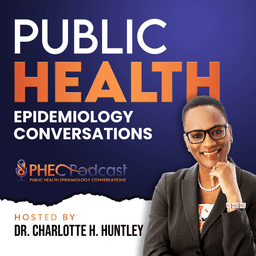









The beat, written
What is actually on this beat
A surveillance bulletin, a long interview about housing, an NHS operations discussion, and a conversation about finding a first public-health job can sound as though they belong in different queues. Here they meet at the point where individual health becomes a question of systems, evidence, access, and collective action.
The listening paths split quickly. Some shows follow outbreaks and misinformation in real time. Others examine the machinery of care, from workforce shortages to primary-care reform. A third group stays close to communities, asking who is overlooked and what changes on the ground. For practitioners and students, there is also a career lane: less theory, more candid talk about how people enter the field and learn to lead.
Disease, evidence, and the public argument
Outbreak News is the most direct choice for listeners tracking infectious disease. Its episode list moves rapidly across pathogens and locations, with Cyclospora outbreak 2026, Michigan reports rapid rise in Cyclospora, and Dengue outbreak in Sri Lanka, Diphtheria in Haiti and more news: Outbreak News Radio. The titles are specific and report-like. Even a broader episode such as Antibiotics, antimicrobial resistance and the Revenge of the Microbes keeps the focus on a recognizable public-health threat.
Unbiased Science takes a different route. It sounds like science-literate friends trying to make difficult health questions usable, with brisk clarifications, jokes, and enough technical vocabulary to respect the subject. The show is especially useful when the public conversation has become crowded with confident claims. Summer Rerun - So Far So Fake: The Impact of Misinformation in Today's Society makes that concern explicit, while Adult Vaccines: Another Round of Shots (Turned Down For What?) and Summer Rerun- Superbugs: The Piece de Microbial Resistance point toward vaccines and antimicrobial resistance.
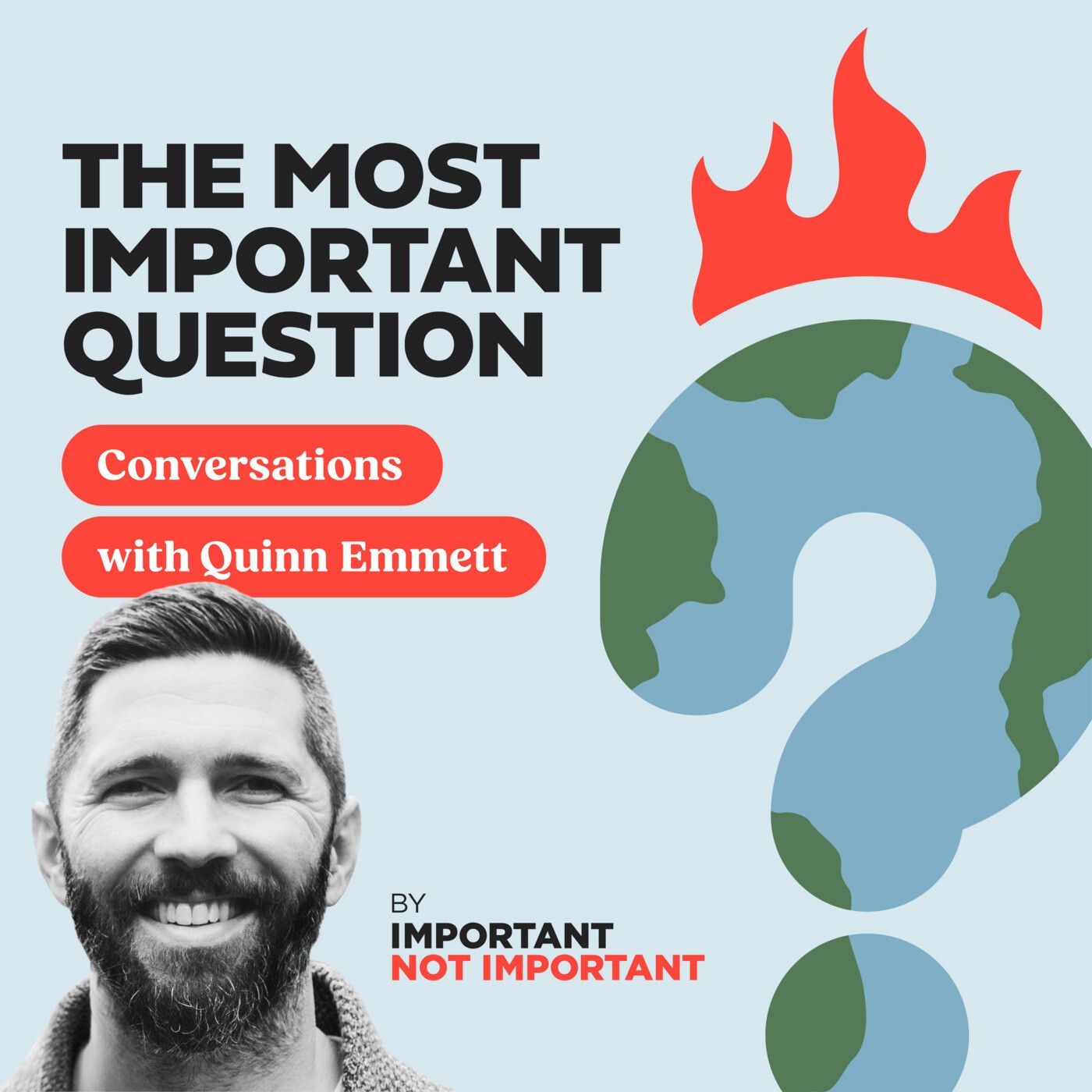
The Most Important Question is more argumentative in texture. It begins from a concrete concern, then pushes toward systems and consequences without settling into institutional language. Public Health In A Post-Evidence World is the obvious entry for listeners worried about how evidence survives political pressure. The Plastic Crisis Isn't On You, Actually signals another recurring move: shifting attention from private responsibility toward the structures surrounding a problem. Some of its appeal comes from bluntness.
How care systems bend—or fail to
National Health Executive Podcast speaks in the language of NHS operations. Its interviews are measured, detailed, and willing to leave the machinery visible rather than rushing toward a neat takeaway. The sequence from Ep 65. Tackling long wait times to Ep 64. NHS Recruitment and Ep 61. Workforce of Tomorrow gives a clear sense of its practical interests. Listeners who like organizational detail can continue with Ep 60. The NHS New Hospitals Programme or Ep 55. Virtual Wards and Telemedicine.
The Other 80 widens the frame while keeping patients, families, and communities in view. Questions arrive with context, and guests are given room to explain mechanisms rather than reduce them to talking points. Rebuilding Primary Care with Rushika Fernandopulle and Making Drugs More Affordable with Paul Markovich (Encore Episode) point toward access and affordability. Breaking the Cycle of Homelessness with Kunal Modi and Free Childcare for All with Elizabeth Groginsky push health beyond the clinic door. The show suits listeners who want humane systems thinking without a detached academic tone.
These conversations sit on the Public Health shelf because their scale is larger than a single appointment or treatment decision. When your question becomes primarily clinical, move across to Medicine. Mental Health is the clearer route when emotional distress, therapy, or psychiatric care is central; Nutrition is better when food and dietary practice are the main concern. To widen the search again, return to Health & Fitness.
Communities are where policy lands
Public Health Insight is a strong all-purpose starting point. Its interviews are serious but accessible, translating professional language into questions about missing data, assumptions, affected communities, and implementation. Turning Data To Action With Community Needs Assessments captures that practical habit. Debate the Policy, Not the Science points toward the boundary between evidence and public decision-making, while Flint Is (Re)Writing Its Own Story & You Should Pay Attention places a community directly in the title. The show lets an answer develop instead of forcing instant certainty.
The Healthy Project Podcast works closer to lived experience. Its interviewing style is warm, plainspoken, and persistent about what policy or funding changes mean for real people. Building Community Trust in Public Health: 30 Years of Equity-Focused Communication Strategies with Darolyn Davis names trust as a central concern. Housing appears in Homelessness Is a Housing Problem with Dr. Margot Kushel, and place-based risk is foregrounded by Why Your Zip Code Might Be Killing You — Iowa's Cancer Crisis Explained. For listeners who want systems language tied back to daily life, this is a useful bridge.
Geography becomes unavoidable on This Is Rural Health. The show resembles a policy briefing or professional convening, with technical vocabulary and long explanations of care delivery. Healthy Rural California — Addressing Access to Care and Health Inequities in the Rural North gives the clearest on-ramp. Rethinking Dental Access— Serving the Overlooked narrows that access question, while Get Loud! If Not You, then Who? Advancing Rural Aging Advocacy points toward advocacy for older rural residents. Its tone is workmanlike, well suited to listeners already comfortable with health-system language.
Community Possibilities comes from an adjacent nonprofit and civic angle. The interviews begin with professional work, then make room for biography, purpose, burnout, and the experiences that shaped a guest’s commitments. Workforce Housing is a Community Issue: Meet Tiffany Watson and Closing the Digital Divide for Families: Meet Richard Hicks identify two community conditions directly. How Community Leaders Build Trust and Inspire Real Change: Meet Gabrielle Hawkins-Stewart makes a natural companion to the trust-focused conversations elsewhere on this page. For public-health concerns approached through local leadership and nonprofit practice, turn to Community Possibilities.
Finding a place in the work
Public Health Epidemiology Conversations treats careers as stories rather than résumés. The interview rhythm is generous and reflective, giving guests space to connect personal turns with systems, equity, and community practice. Public Health Is Everywhere is the broadest invitation. Plain Language As Resistance, With Catherine Troisi, PhD, MS points toward communication, while Simplifying AI for Public Health, With Kumba Sennaar, PhD brings a newer technical question into the professional conversation. When Communities Define Public Health is a good choice for listeners who prefer community knowledge to top-down framing.
Public Health SPOTlight Podcast is more explicitly career-minded. Its warm mentor voice is aimed at people trying to enter the profession, grow into leadership, or understand what the work can look like. Start with 10 Public Health Careers You Might Not Have Considered (With Real Job Examples!) for breadth. Leadership Skills Every Public Health Professional Should Develop shifts from roles to capability, and Effective Networking Strategies for Public Health Professionals gets practical about professional relationships. It is the least intimidating doorway for a listener asking, “Could I do this work?”
Where to start
For a broad introduction, begin with Public Health Insight and Turning Data To Action With Community Needs Assessments. For fast-moving disease surveillance, choose Outbreak News and Cyclospora outbreak 2026. If systems and access are your main interests, try The Other 80 with Rebuilding Primary Care with Rushika Fernandopulle, or This Is Rural Health with Healthy Rural California — Addressing Access to Care and Health Inequities in the Rural North. Anyone exploring a career change can go straight to Public Health SPOTlight Podcast and 10 Public Health Careers You Might Not Have Considered (With Real Job Examples!).
Featured shows below are part of the PlayNext catalog. Updated weekly.
Recommended clips
The best minutes on this beat
The highest-scoring 60-second moments anywhere in public health, one per show.
Drawn from 253 playable clips across 25 shows.
Featured shows
9 shows, described rather than listed
Each has a written blurb stored with the page, with the role its editor gave it on this beat.
Warm, interview-led conversations tracing how practitioners found public health and what they're building — careers, equity work, and community-level practice told as lived stories.
Fast-paced outbreak tracking across infectious diseases worldwide — measles, Lassa, dengue, and more, reported as they develop with an eye on what public health systems are actually doing.
Evidence-based health systems journalism anchored in the premise that 80 percent of health outcomes happen outside the clinic — homelessness, chronic disease, childcare, and violence interruption all treated as public health problems.
Inside-the-NHS policy conversations on workforce, wait times, pathway reform, and the operational realities of running a large national health system under sustained pressure.
Serious and mechanically focused critique of NHS failure modes, with particular emphasis on antimicrobial resistance as a systemic threat requiring coordinated public preparedness.
Policy-grounded public health journalism that stays close to evidence — Flint's water crisis, snakebite as a neglected disease, cash transfers for maternal health, and the politics of data.
Public health as a political question — post-evidence epistemics, plastic pollution as a systems failure, and what it means to practise public health when institutional trust is thin.
Nonprofit and community health infrastructure in practice: grants, trust-building, organizational resilience, and the people who keep health programs running on the ground.
Rural health systems from the inside — workforce pipelines, dental access, aging advocacy, and equity analysis specific to the constraints of place-based rural communities.
Where to start
5 routes in, one per reader
Follows practitioners through how they arrived at the work — makes the field's scope legible before the technical vocabulary lands.
Rigorous evidence-based analysis of social determinants, with episodes on homelessness, chronic disease, childcare, and community violence treated as interconnected health problems.
Fast surveillance reporting on active outbreaks worldwide — the right feed if you need to track what public health agencies are actually responding to.
Organizational layer under policy: grants, trust, resilience, and the practical work of keeping community health programs funded and functional.
Dedicated to the operational realities of rural health systems — workforce, access, equity, and what community collaboration actually looks like at rural scale.
Glossary
Words this beat uses without explaining
The non-medical factors — income, housing, education, environment — that shape health outcomes, estimated to account for roughly 80 percent of population health variation.
The study of how disease and health conditions are distributed across populations, what drives those patterns, and how to intervene at the population level.
The process by which bacteria, viruses, and fungi evolve to resist the drugs used to treat them, increasingly described as a slow-moving public health emergency.
The goal of eliminating avoidable, unfair differences in health outcomes between population groups — typically those rooted in structural, historical, or economic causes.
A systematic approach to improving health outcomes across a defined population by identifying risk, coordinating care, and addressing upstream determinants at scale.
The continuous monitoring of disease events and health indicators across populations and geographies, enabling early detection and coordinated public health response.
A group of infectious and non-communicable conditions disproportionately affecting low-income populations in tropical regions, often under-resourced relative to their disease burden.