Topics / Trauma & Recovery
Trauma & Recovery Podcasts
358 shows and 38,698 episodes sit under Trauma & Recovery.
The best trauma and recovery podcasts in 2026: somatic and nervous-system shows, childhood trauma, betrayal trauma, grief, and parenting after trauma
Swipe · Trauma & Recovery only
Swipe through Trauma & Recovery
Save time discovering your next favourite podcast by listening to just the best minute of an episode.
The trauma & recovery slate · every cover a link
All 358 trauma & recovery shows →



Next to this on the shelf
Every subtopic on this beat
The beat, written
What is actually on this beat
The best listening here begins after the vocabulary has run out. A good episode stays with the body sensation, the confused memory, or the relationship pattern long enough for recognition to arrive. Some shows bring clinical language into ordinary life; others speak from inside survival, where recovery can sound repetitive, unfinished, and intensely personal.
That range matters. A polished explanation may help one day, while a loose, companionable voice may be easier to hear the next. The strongest shows understand that insight and readiness do not always arrive together.
When the body is part of the story
Therapy Chat takes the careful clinical route. Its unhurried interviews make room for specialist language, then bring the discussion back to sensations, safety, and the experience of being in therapy. 482: Embodiment + Disembodiment with Dr. Hillary McBride is a direct entry into the body’s place in recovery, while 476: Trauma, Somatics and Mindfulness with Lynn Fraser connects three ideas that are often discussed separately. For a more practice-specific conversation, there is 481: Trauma Sensitive Yoga In Therapy - With David Emerson.
An unhurried pace adds to the appeal. Questions are open, answers are allowed to stretch, and technical ideas are not rushed toward a motivational payoff. Listeners who want a calm bridge between clinical thinking and daily experience should begin here.
Emotional Badass comes much closer. The show is primarily a solo, therapeutic monologue, intimate enough to feel addressed to one listener rather than an audience. Its language combines psychology, lived experience, spiritual framing, and the occasional earthy aside. Meghan Judge: Living with CPTSD & Misdiagnosis names the difficulty of understanding what has happened, while Building Intuitive Muscles to Repair Self Betrayal from Childhood Trauma turns toward rebuilding trust in oneself.
Recognition before advice
THE VIBRANT SURVIVOR -How to Identify a Narcissist, Narcissistic Abuse, Toxic Relationships, Trauma Healing, Health, Wellness has the least polished texture of the central shows here, and that is its strength. It sounds like remembering out loud: scene first, then physical response, emotional meaning, and a practical way forward. 176. Why Survivors Go Quiet After Trauma (And What It Really Means) begins with a response that can easily be misunderstood. 175. Order in the Court: 6 Ways I Self-Regulated During Triggering Testimony puts regulation in a sharply defined setting, and 141. Healing From Trauma: Your Path, Your Pace makes room for recovery without a standardized timetable.
You’re Not Crazy: A Podcast for Cycle Breakers with Toxic Parents is more explanatory, though still deeply conversational. Its solo voice works through common beliefs slowly, adding qualifications and corrections until the emotional logic becomes clearer. Forgiveness Is Overrated: What Actually Helps You Heal from a Toxic Parent challenges a familiar expectation directly. The Basic Needs Cycle Breakers Often Ignore (And How This Wrecks Your Mental Health) shifts attention toward needs that may disappear beneath more dramatic family questions.
ShrinkChicks offers a livelier doorway. The duo moves through jokes, interruptions, and personal tangents before settling into plain-language therapeutic framing. Its sequence on Trauma Responses: Understanding The Freeze Response, Trauma Responses: Understanding The Fight Response, Trauma Responses: Understanding The Flight Response, and Trauma Responses: Understanding The Fawn Response gives listeners four concrete points of entry. Serious material needn't mean a solemn atmosphere from beginning to end; ShrinkChicks is for listeners who prefer that balance.
Recovery, addiction, and men’s emotional lives
The Addicted Mind Podcast approaches difficult material as a guided recovery conversation. Clinical terms are explained, restated, and connected to ordinary pressures rather than presented for authority’s sake. TAM+ EP 83 Unlocking the Impact of Childhood Trauma: The ACEs Study places childhood experience at the center of one discussion, while TAM+ EP 106 The Courage to Be Seen: How Vulnerability Transforms Recovery turns toward exposure and connection. Its broader emphasis belongs naturally beside Addiction & Recovery, the neighbouring topic for listeners whose main concern is substance use or sustained recovery work.
Real Men Feel with Andy Grant is broader than trauma alone, but its interview-led, emotionally direct style earns a place here. The show is comfortable circling back, asking a simple follow-up, and letting private experience become part of a larger conversation about identity. Betrayal Trauma Isn't Something You Just Get Over is the clearest on-ramp. Listeners drawn to the show’s wider concerns can continue with Men's Silent Struggles: Overcoming Loneliness and Rejection.
Finding the right neighbouring conversation
Move up to Mental Health to consider emotional health more broadly. When present-day worry, pressure, or physiological arousal is the main issue, head to Anxiety & Stress for a better fit. Stay closer to bereavement and other loss at Grief & Loss; narrow the focus to manipulation, toxic relationships, and their aftermath at Narcissistic Abuse Recovery. Mindfulness & Meditation is useful when the practice itself matters more than the history that made it necessary.
Where to start
Begin with Therapy Chat’s 482: Embodiment + Disembodiment with Dr. Hillary McBride for a measured clinical conversation. Choose ShrinkChicks’ Trauma Responses: Understanding The Freeze Response for an accessible explanation with more energy. Try Emotional Badass’s Building Intuitive Muscles to Repair Self Betrayal from Childhood Trauma when the central question is self-trust. For a survivor-to-survivor voice, start with THE VIBRANT SURVIVOR -How to Identify a Narcissist, Narcissistic Abuse, Toxic Relationships, Trauma Healing, Health, Wellness and 176. Why Survivors Go Quiet After Trauma (And What It Really Means).
Featured shows below are part of the PlayNext catalog. Updated weekly.
Featured shows
8 shows, described rather than listed
Each has a written blurb stored with the page, with the role its editor gave it on this beat.
Physiological frame: trauma as tissue and nervous-system wiring, not just memory.
Childhood-origin patterns showing up in adult life — high-functioning exterior, stressed interior.
Practitioner-led deep dives: yoga therapy, SSP, somatic experiencing, embodiment.
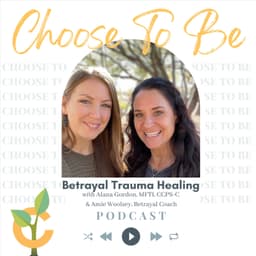
Survivor-oriented coverage of betrayal trauma in intimate relationships — infidelity, hidden addiction.
Eight-episode series naming grief types as distinct constructs; collective grief at population scale.
Intergenerational trauma and parenting — the mother's own healing as the primary work.
Childhood trauma and addiction as inseparable pathways; ACEs research and somatic modalities.
Betrayal trauma within addiction recovery contexts; family-systems and treatment-navigation episodes.
Where to start
5 routes in, one per reader
Starts from physiology — why the body runs old threat responses — before moving to healing.
Directly addresses how childhood trauma patterns show up in adult work, relationships, and self-worth.
Survivor-oriented and practical; covers anger, post-separation abuse, and the diagnostic gap.
Names grief types as distinct constructs before asking listeners to process them.
Covers yoga therapy, SSP, somatic experiencing, and embodiment with the practitioners who developed them.
Glossary
Words this beat uses without explaining
Complex post-traumatic stress disorder — a pattern of symptoms arising from prolonged or repeated trauma, often in childhood or in abusive relationships, distinct from single-incident PTSD.
A framework developed by Dr. Stephen Porges describing how the autonomic nervous system regulates safety, threat response, and social engagement — widely applied in somatic trauma therapy.
A body-oriented therapy developed by Peter Levine that focuses on releasing trauma stored in the nervous system through bodily awareness rather than narrative processing.
Trauma that occurs when someone who holds power over a person's wellbeing — a caregiver, partner, or institution — violates that trust; conceptually distinct from single-event shock trauma.
Adverse Childhood Experiences — a category of stressful or traumatic events in childhood (abuse, neglect, household dysfunction) shown by landmark CDC research to have dose-dependent health effects across the lifespan.
A listening intervention developed by Dr. Stephen Porges that uses filtered music to stimulate the vagus nerve and support nervous system regulation; used as an adjunct in trauma therapy.